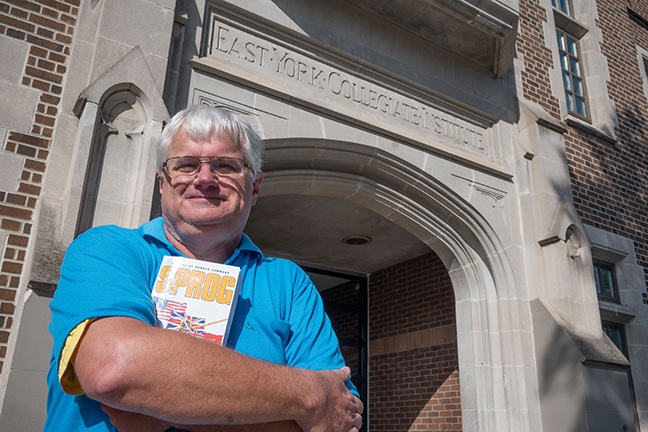
January 8, 2026 - Bill Fraser
Talk Title - Research and Development in Support of Canadian Forces Personnel
Members of the Canadian Forces are often required to perform their missions while exposed to
extremes of heat, cold, atmospheric pressure, sleep deprivation, acceleration, physical and
cognitive workloads, and psychological stress at levels rarely or ever experienced by civilians.
The Canadian Defence Department has a long history of investigating the impact of these
stresses on human performance and developing technologies to minimize their impact on the
men and women of the CF, enabling them to undertake their assigned missions successfully.
The presentation will focus on some of the unique challenges associated with undertaking this type of research, including the use of human subjects, ethical constraints, equipment and personnel costs, and multinational collaboration.
Bill was employed by Defence Research and Development Canada for 32 years, retiring in 2012.
His research efforts were focused on models of stress and human performance, the
biomechanical, biochemical, and neurological factors underlying neck pain in rotorwing aircrew,
the immunological aspects of decompression sickness, the development of techniques for
monitoring and quantifying aircrew performance, the physiological responses to high altitude
rapid decompression, the cardiovascular and cerebrovascular mechanisms of acceleration-
induced loss-of-consciousness, and the development of computer-controlled aircrew life support
systems for crews of high-performance aircraft.
He has authored or co-authored over 150 conference presentations, technical reports, articles, and journal publications.
As well, he is an elected Fellow of the US Aerospace Medical Association, an elected Fellow of the Aerospace Human Factors Association, has served as Chair of the Scientific Program Committee for the Aerospace Medical Association Annual Scientific meeting, is a past President of the Life Sciences and Biomedical Engineering Branch of the Aerospace Medical Association, and is past Chair of the Australia, Canada, New Zealand, United States, and United Kingdom Technical Cooperation Panel on Human Systems Integration – Air.
Bill was the Canadian representative on the NATO RTO/RTA Working Group on Operator Functional State Assessment, a member of the US Environmental Protection Agency panel on the Physiological Effects of Alternative Fire Protection Agents, a member of the Canadian National Sciences and Engineering Research Council Mechanical Engineering Grant Selection Committee, Chair of the Science and Technology Committee of the Aerospace Medical Association and Editor of the Science and Technology Watch column of the Aviation Medicine and Human Performance Journal.
He is the recipient of the Eric Liljencrantz Award from the Aerospace Medical Association. He currently serves as a scientific advisor to 3D4MD, a for-profit social enterprise with a mission to utilize 3D printing technology to create sustainable solutions that reduce poverty and deliver healthcare in the Global South.