The Book Club meets on the first Wednesday of each month on Zoom.  The Zoom link is sent out to all members on the morning of the meeting which starts at 10am and typically ends around 11 am.  At each meeting a member (the presenter) presents a book previously selected for discussion by the members. After a 5 minute presentation by the presenter, each attendee in turn comments for two or three minutes on the book and gives it a rating out of 10. The presenter then leads a general discussion about the book, often followed by recommendations for books to be added to our recommended list. All Probus members are welcome to join us any time.  It is not necessary to attend our discussions every month, nor to complete reading every book before coming.  Please contact the Convenor David Williams by email to ask any questions, or to be added to our roster so that you will receive a reminder/invitation to every meeting.
How to submit a report
One email with pictures and reports will make it to both the newsletter and the website.
Please submit them as soon as possible.
Photos and videos from more than one member are OK.
Send to: applepro805@gmail.com
 

Month

Title

Author

January 2026

The Coming Wave: AI, Power and our Future

Mustafa Suleyman

February

Austen at Sea

Natalie Jenner

March

Peggy

Rebecca Godfrey

April

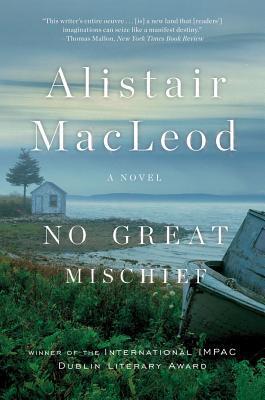
No Great Mischief

Alistair MacLeon

May

Sir John A Macdonald and the Apocalyptic Year 1885

Patrice Dutil

June

Health for All

Jane Philpott

July

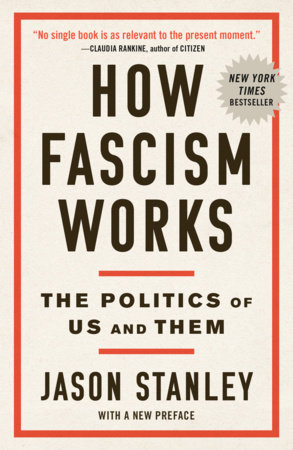
How Fascism Works

Jason Stanley

August

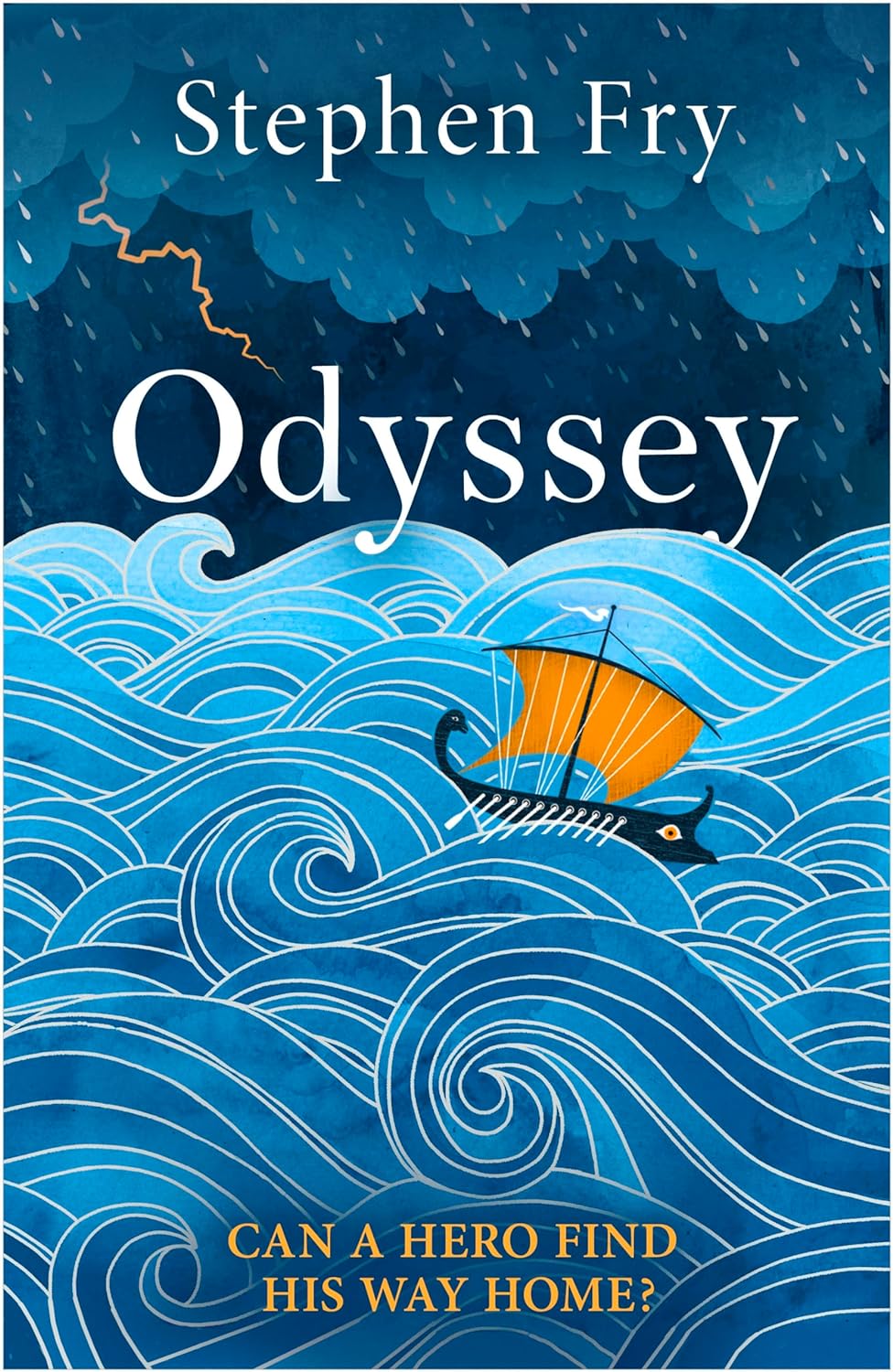
Odyssey

Stephen Fry

September

Magpie Murders

Anthony Horowitz

October

Civilization: The West and the Rest, The Ascent of Money

Niall Ferguson

November

A Bookshop in Berlin

Francoise Frenkel

December

Permanent Astonishment

Tomson Highway


The London Restoration by Rachel McMillan
December 3, 2025

Several members felt that the book was disjointed, and that it contained elements of four or five books because of the varied plot lines. This disunity meant that none of the stories was well-realized. 

It appears that the author dictates the text, with the result that errors creep in:  populous instead of populace, a long finger of scotch, for example.  In several places, there was too much swooning.

A lot of the text was repetitive, and not advancing the plot of the book. Coverage of the condition later called PTSD was sympathetic. While references to the Wren churches generated interest, the notion of using relics as a means of communication was far-fetched. 

Rating of the book:   6.25

Books mentioned during the meeting:

The Mozart Code, by Rachel McMillan
The Bachelor Girl’s Guide to Murder, by Rachel McMillan
Bird’s Eye View, by Elinor Florence
Agent Sonya, by Ben MacIntyre
The war We Won Apart, by Nahlah Ayed
History of Philosophy, by A. C. Grayling
The Rook, by Daniel O’Malley


David Williams


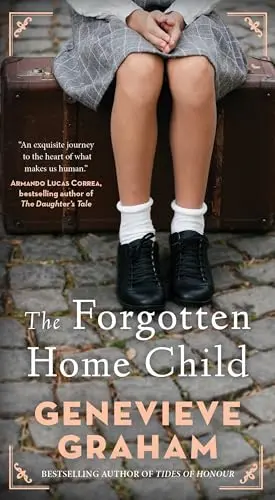
The Forgetten Home Child by Genevieve Graham
November 5, 2025

While many members were aware of the removal of UK children for safety during WW2, few were aware of the existence or the scope of the Bernardo program.

This book fleshes out the lives of these children by means of historical fiction.  While the intentions of the originators of this program were good, the lack of oversight in Canada led to a terrible history of abuse of all of the children, particularly females.  Only a few fortunate home children landed in caring homes.

Similarities with the consequences of the Residential Schools were clear to all members.  For some of the home boys, the rigors of army life were a holiday from their lives otherwise.  The depersonalization of home children (their given names were rarely used by their masters) was part of the abuse they suffered, along with being exiled to outbuildings. Three members of the club had relatives who were home children. 

The book, though well-written, covers a depressing subject.  The author tended to an over-reliance on coincidences. 

Rating of the book:  8.0

Book mentioned during the meeting:

Finding Fiona, by Elinor Florence  

David Williams
Convenor


Island of Extradordinary Captives by Simon Parkin
October 1, 2025

Fear of invasion led to a number of arbitrary decisions, including the interning of many who had fled Nazi Germany (many through the Kinderstansport program), hoping for sanctuary in the UK.  The similar interning of Japanese Canadians was not a highlight of the tenure of Canadian Prime Minister MacKenzie King. The author brought to the fore a number of facts not generally known about world war 2, including camps for prisoners of war and enemy aliens, both in the UK and in Canada.   Also little-known was the sinking (by a German submarine) of a shipload of enemy aliens en route to Canada, with more than 800 lives lost.   Some members thought the book lacked a thread, although the story of the community of artists gave cohesion to the book. 

The author describes the book as a work of historical non-fiction, and he took pains to ensure that only primary sources were used:  there are extensive notes supporting assertions.  Those interned on the Isle of Man were fortunate to have a camp commandant (Captain H. O. Daniel) who supported the intellectual and artistic community efforts of the inmates. The inclusion of  photographs of the camp and of artwork by both Schwitters and Fleischmann/Midgeley supplemented major points in the story. 

Rating of the book:  7.3

Books mentioned during meeting (the most to date):

How Fascism works, by Jason Stanley
Peace by chocolate, by Jon Tattrie
The sword of freedom: Israel, Mossad, and the secret war, by Yossi Cohen
Man’s search for meaning, by Victor Frankl
Battle of Britain, by Ted Barris
Days of Victory, by Ted Barris
Revenge of the Tipping Point, by Malcolm Gladwell
The coming wave: AI, Power and our future, by Mustafa Suleyman
The lobster trap, by Greg Mercer
The mind mappers, by Eric Andrew-Gee
Epictetus, complete works, edited and translated by Robin Waterfield
Meditations, by Marcus Aurelius, translated by Maxwell Staniforth
Montaigne’s Essays, translated by Donald M. Frame
Odyssey, by Stephen Fry
BBC programs on YouTube re Kindertransport (2012) and Sir Nicholas Winton (aired on “That’s Life” in 1988)

David Williams
Convenor



Bloomsbury Girls by Natalie Jenner
September 3, 2024

There was general agreement that this was a well-written, enjoyable, light summer read.  The main characters were well-developed, as was the overarching patriarchal running of the bookstore.  When they broke through that barrier, the women in the bookstore demonstrated positive results .  The many rules of the bookstore provided a useful framework for the short chapters.  It was neat that the Evie character was a founding members of the Jane Austen Society, and also got to interact with a generous slice of the beau monde.  Of course, Noël Coward would have to be playing piano at one of the Bloomsbury Book parties.

Our August book (Papyrus) referred to Callimachus, who catalogued the Library of Alexandria:  In this month’s book, we have Evie, who catalogued the holdings of Bloomsbury Books—projects differing in scale, but both requiring passion. 

Rating of the book: 7.1

Books mentioned during the meeting:

84, Charing Cross Road, by Helene Hanff
(A streaming version of the 1986 film from the book is available on Netflix)

Austen at Sea, by Natalie Jenner

Peggy, by Rebecca Godfrey (biography of Peggy Gugenheim, published 2025)

David Williams


Papyrus by Irene Vallejo
August 6, 2025

Vallejo compares the lowly Nile reed to the critical minerals that make our cell phones work, both inventions which transformed their respective societies.  The bulk of this lengthy tome addresses knowledge, its diffusion, preservation, and durability.  The text is generously annotated and indexed:  this would raise cheers from cataloguers and librarians.

The author clearly is conversant with the books she references:  the internal parallels of plot and character over the centuries would have been otherwise impossible.  The book is translated from its original Spanish by Charlotte Whittle, who has maintained the author’s engaging voice throughout.

Rating:  8.25

Books mentioned:
The Persians, play by Aeschylus
A bookshop in Berlin, by Françoise Frenkel
Memoria de la Librería, by Carlos Pascual, Paco Puche, Antonio Rivero
Arabic into Latin in the Middle Ages, by Charles Burnett
The book woman of Troublesome Creek, by Kim Michele Richardson
A history of reading, by Alberto Manguel
Civilization the west vs the rest, by Neal Ferguson
Cicero trilogy, by Robert Harris

David Williams
Convenor


Valley of the BIrdtail by Andrew Stobo Sniderman
July 2, 2025

The book is an expert blend of history, narrative, and biography.  Many of the events covered occurred in our lifetime.  The book sparked many thoughts and comments regarding the settlement of the prairies.  The racism of that time (and the present) was potent, perennial, and subtle (for example recent comments by Ontario’s premier).  At every turn in this account there is a broken treaty.  The iron control of the residential schools regularly crossed the border into sadism.  That excessive control even led to attempts to suppress indigenous ceremonies and drumming.  Comparison of education in the two communities on opposite sides of the Birdtail river underscored the disparity in funding for education.  Correction of this inequity caused an immediate uptick in graduation rates.  The operation of reserves as a means of controlling free movement of people and produce is appalling.  The lack of property rights has had disastrous consequences for financial management. Throwing money over the wall of reservations is not going to produce desired effects, unless linked to an administration composed of all concerned parties.

The concluding sentences of the book summarize the author’s recommendations:  

“To see First Nations governance as an integral part of our Canadian culture is not to stretch the imagination—it is to stretch our arms, and embrace each other as equal partners in a vast and complicated land. There is enough to share. Land, resources, wealth: there is enough for everyone, and there always has been.”

Rating of the book:  8.6

David Williams
Convenor


Dissolution by C.J. Sansom
June 4, 2025

Several club members were sufficiently engaged by the author to go ahead and read more volumes of the six-volume series which begins with Dissolution.   The combination of historical fiction and a murder mystery was strong enough to attract readers who usually avoid either element on its own.  The reader is taken along with the commissioner (Shardlake) and made current with the lifestyles of the period, health care, and clothing.  Shardlake’s own physical challenges were part of a well-rounded character, and explained his sensitivity to abuse of others.  The need of the king to have confessions at all costs showed a deadly insecurity.  The use of language long out of currency added some spice to the book.  Readers were reminded of the time required for exchanging messages in the 16th century.  There was good detail about the daily activities of a monastery.  Comparing the fate of monasteries in Germany with those in England was interesting.  The plot was sufficiently tangled to make the solution of the murder of the first commissioner a surprise.  The carving-up of church properties (land in particular) and its handing over to a new class of oligarchs had a resonance with current affairs.  Much of that land is still in possession of descendants. Shardlake’s growing disillusion regarding the methods of Oliver Cromwell was believable. 

Rating of the book:  8.75

Mentioned during the meeting:

Wolf Hall trilogy by Hilary Mantel, shown on Netflix

Niall Ferguson, Civilization: The West and the Rest, The Ascent of Money:  a financial history of the world

David Williams
Convenor


A New Season by Terry Fallis
May 7, 2025
    
The group agreed that this book is in a different vein than earlier ones:  the humorous situations such as those involving his character Angus were missed.  All agreed that the book is a light, easy read.  Big names from the 1920s and onward abound:  Josephine Baker, Sylvia Beach, Hemingway, Callaghan.  Paris of the 1920s was an excellent hook for the later part of the book.  There was varied interest in ball hockey, but certainly understanding of its demands on the body.  The writing of this book provided a bridge for the author and his readers across the despondent times of COVID.  Similarly, writing music helped the writer renew his emotional stability.  The love story in the book, though predictable in some ways, had a satisfactory outcome. 

Rating of the book:  7.4

Other books mentioned:


Churchill, The Gathering Storm, Their Finest Hour
Author Camilla Trinchieri (light, entertaining mysteries)
Black Cake, by Charmaine Wilkerson
Value(s) by Mark Carney
Moon of the Crusted Snow, by Waubgeshig Rice
Dickens, The Pickwick Papers

David Williams
Convenor


Sunshine Sketches of a Little Town by Stephen Leacock
April 2, 2025
    

The rating for this book, published in 1912, was 8.55, which shows that Leacock’s humour is timeless.  This book club meeting ran slightly short, which also supports the notion that good news can be told briefly.  The book was written in the shadow of the Canadian election of 1911, in which reciprocal trade with the US was a major issue.  Leacock brings only gentle, subtle humour to his account of the Great Election in Missinaba County.  His deeply-laid humor was likened to a very soft curve ball, unlike much that passes as comedy at present.  Members enjoyed the details of life in a small town, such as the barbershop as community hub, and the political positions of the clergy. 

Authors mentioned during the meeting: G. K. Chesterton

Books mentioned during the meeting;  Lorne, The Man Who Invented Saturday Night Live, by Susan Morrison 
          Literary Lapses by Stephen Leacock

David Williams


Cello Notes: Music and the Urgency of Time
March 5, 2025
    

We were privileged to have the author attend our Zoom meeting.  Members agreed that it was encouraging to follow the progress of a recent retiree following a new passion.  The author’s journal of personal experiences during time spent with her teacher, time spent practicing, and time spent in performances allowed her to share the joys, sorrows, and pivotal moments of her trajectory as a cellist.  The book is an easy read.  Himes’ account of the musculoskeletal aspects of learning to play a cello as an older adult gave an almost muscle-by-muscle coverage of her progress (who knew the hand had 34 muscles?).  In comparison to the singing voice of a stringed instrument, the piano is definitely a percussion instrument. Himes’ earlier career as a clinical psychologist has allowed her to see and promote the benefits of music in all walks of life.  

Mentioned during the meeting:
Storyworth (a subscription company which helps you write your memoirs)

Rating of the book: 7.7

David Williams


Everybody in my family has killed someone
February 5, 2025


Ratings for this book ranged from a low of 4 to a high of 8 (average 6.5).  Most members thought the story was off to a slow start: it took a while to realize that the story was a parody of many earlier mysteries.  When this was recognized, many members found themselves chuckling along with the author.  The allusions to other mystery writers were appreciated, and many enjoyed the author’s tongue-in-cheek asides and explanations for the reader.  The plot was replete with wrinkles and red herrings.  


Books mentioned during the meeting:
Magpie Murders by Anthony Horowitz
Foyle’s War, TV series written by Horowitz
The Guest List, by Lucy Foley
Battle of Britain, by Ted Barris
Sir John A. Macdonald & The Apocalyptic Year 1885, by Patrice Dutil
Fear, by Bob Woodward
War, by Bob Woodward

Musicians mentioned during the meeting:
Moshe Hammer and the Hammer Band
Stjepan Hauser, Cellist
Pablo Casals, Cellist (the six cello suites)
Yo-Yo Ma, Cellist

David Williams
Convenor


The Grey Wolf by Louise Penny
January 8, 2025
    

There was general agreement that Penny’s earlier books were better than this one.  What brings readers back to her books is her emphasis on family, community and trust. 

A significant tourist industry has grown around the locales used in Penny’s books, particularly the village of Knowlton, Quebec, the inspiration for Penny’s Three Pines.  Penny’s references to food and friends are engaging. 

Some key points are unclear in the book:  what happened to the gram of C. botulinum toxin, and what was the motivation of those who were threatening the water supply?  Nevertheless, the vulnerability of infrastructures is clear.

The ominous, apocalyptic plot device was recognizable early in the book.  The monosyllabic duck, Rosa, has drawn various responses from readers.  Members thought the book was rather long, and contained excessive detail in places. Members also observed that Penny’s plots are starting to shift toward international crimes, with overtones of Ian Fleming and Dan Brown  The fabric of her books is becoming strained by the pressures of yearly publication.  It is a measure of Penny’s success that readers have definite expectations that she will live up to her own standard. 

Rating of the book:  6.5 

Books mentioned during meeting:

Magpie murders, by Anthony Horowitz
Champlain’s Dream, by David Hackett Fischer (prompted by references to Champlain in Penny’s Bury Your Dead)
The Beautiful Mystery, by Louise Penny


Video of Stephen Fry demonstrating a cocktail which has different colors in different volumes (prompted by a search for the ‘chartreuse effect’):


https://x.com/jpbowen/status/389782914306961408


David Williams